- see contact page
- Currently offline
The role of Zora Arkus-Duntov, the “Father of the Corvette.”
The Contribution of Zora Arkus-Duntov to the Corvette
Zora Arkus-Duntov is often referred to as the “Father of the Corvette.” He played a pivotal role in the development of the Chevrolet Corvette, ensuring its place as an iconic American sports car. His work not only improved the performance of the Corvette but also solidified its reputation among car enthusiasts worldwide. In this article, we will explore his background, his entrance into the automotive industry, the enhancements and innovations he introduced to the Corvette, his focus on performance and racing, and his enduring legacy.
Background and Entry into General Motors
Zora Arkus-Duntov’s life story is as fascinating as his contributions to the automotive industry. Born in 1909 in Belgium to a family with diverse interests and talents, Arkus-Duntov was exposed to engineering and innovation at an early age. He later moved to the United States, where he would eventually leave an indelible mark on American automotive history.
Arkus-Duntov joined General Motors (GM) in 1953, a time when the company had introduced the Corvette but had yet to establish it as a high-performance vehicle. The Corvette, at that point, was more of a concept in search of direction. Arkus-Duntov, recognizing the sports car’s potential, quickly immersed himself in improving the vehicle, aiming to produce a car that appealed not only to casual drivers but also to serious car enthusiasts.
Enhancements and Innovations
With Arkus-Duntov’s entry into GM, the Corvette began a transformation that would change its trajectory. One of his early and most impactful contributions was the introduction of a higher-performance V8 engine. The original six-cylinder engine did not deliver the power needed to compete with other sports cars of its time. The transition to the V8 significantly boosted the Corvette’s power output and its overall appeal, thus drawing the attention of performance-oriented drivers.
In addition to mechanical upgrades, Arkus-Duntov also spearheaded the development of the Corvette SS in the mid-1950s. Although this model was not mass-produced for consumer markets, it served as a proof of concept for the Corvette’s potential on the race track. With racing being a critical part of car development and brand prestige at the time, the Corvette SS marked an important step in positioning the Corvette as a competitive sports car.
Beyond engine improvements, Arkus-Duntov was a firm advocate for innovative body design. He championed the use of fiberglass bodies, a revolutionary idea that helped in reducing the car’s weight, enhancing its aerodynamics and performance capabilities. Fiberglass construction was relatively new in the automotive world, but Arkus-Duntov’s advocacy for this material demonstrated his willingness to push the boundaries of traditional car manufacturing.
Focus on Performance and Racing
Zora Arkus-Duntov’s vision for the Corvette extended beyond just consumer vehicles; he had a strong focus on establishing it as a formidable presence in the racing world. His role in the development of the Corvette Grand Sport is a testament to his commitment to this goal. The Grand Sport was a lightweight and high-performance version tailored specifically for track use. Unfortunately, due to corporate policies limiting its full potential in racing, the Grand Sport was not able to showcase its full capabilities in a competitive setting. Nevertheless, its development was a reflection of Arkus-Duntov’s relentless pursuit of performance excellence.
Another major contribution was the introduction of the “Duntov Cam,” a high-performance camshaft that became a sought-after upgrade among Corvette owners and enthusiasts. The “Duntov Cam” enhanced engine performance, giving the Corvette a significant edge in the competitive sports car market. This enhancement further solidified the Corvette’s status as a high-performance sports car.
Arkus-Duntov wasn’t just focused on technical enhancements but also played a key role in fostering a racing culture around the Corvette. His leadership inspired a generation of engineers and drivers, emphasizing a need for continuous improvement and innovation, hallmarks that continue to define the Corvette brand today.
Legacy and Impact
Zora Arkus-Duntov retired from General Motors in 1975, but he left behind a legacy that profoundly influenced the trajectory of the Corvette. His passion for innovation and performance not only transformed the Corvette but also elevated it from a modest sports car to a symbol of American automotive excellence. As a result, his contributions are celebrated and remembered by car fans and industry insiders alike.
In acknowledgment of his achievements, Arkus-Duntov was posthumously inducted into the Corvette Hall of Fame in 1998, solidifying his position as a pioneering figure in the automotive world. His posthumous recognition ensures that his contributions remain a central part of Corvette history and its ongoing success.
Zora Arkus-Duntov’s work remains essential to understanding the history and the success of the Corvette brand. His innovative spirit and relentless drive for excellence laid a strong foundation for future advancements in automotive engineering. Even today, the Corvette continues to be synonymous with performance and innovation, reflecting the values that Arkus-Duntov instilled during his tenure at General Motors. His life’s work serves as an inspiration to budding automotive engineers and enthusiasts, representing the impact one individual’s dedication and vision can have on an entire industry.
2nd Generation
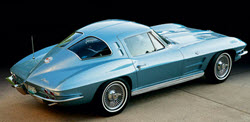
- 1963 Corvette Stingray
- 1964 Corvette Sting Ray
- 1965 Corvette Sting Ray
- 1966 Corvette Sting Ray
- 1967 Corvette Sting Ray
3rd Generation
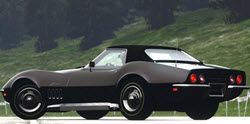
- 1968 Corvette Sting Ray
- 1969 Corvette Sting Ray
- 1970 Corvette Sting Ray
- 1971 Corvette Sting Ray
- 1972 Corvette Sting Ray
- 1973 Corvette Sting Ray
- 1974 Corvette Sting Ray
- 1975 Corvette Sting Ray
- 1976 Corvette Sting Ray
- 1977 Corvette Sting Ray
- 1978 Corvette Sting Ray
- 1979 Corvette Sting Ray
- 1980 Corvette Sting Ray
Modern Corvettes