- see contact page
- Currently offline
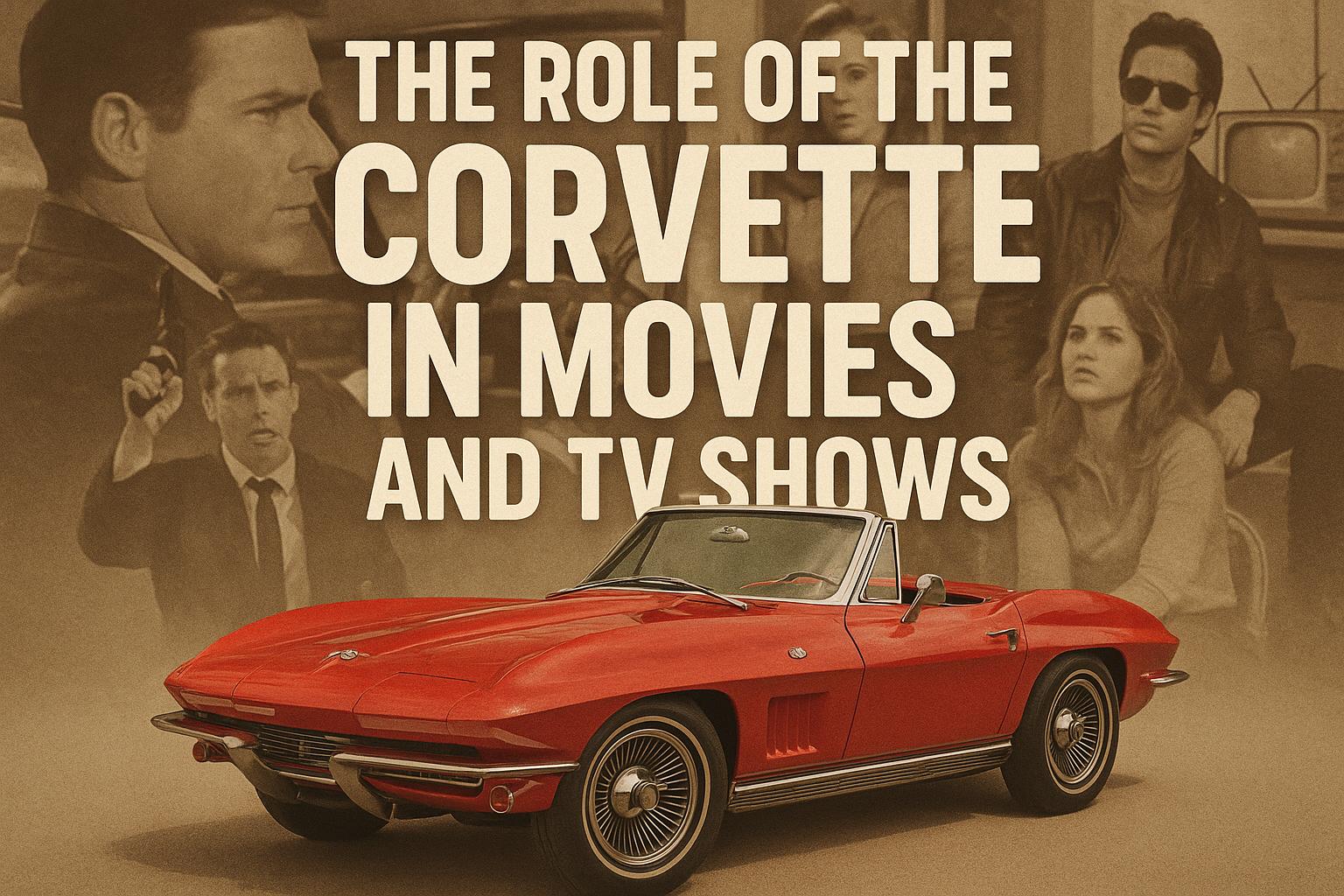
The role of the Corvette in movies and TV shows.
The Iconic Presence of the Corvette in Film and Television
The Chevrolet Corvette has long been a symbol of American automotive engineering, consistently appearing across a wide range of films and television programs. Introduced in 1953, the Corvette quickly developed a reputation for combining performance, style, and innovation. These qualities translated effectively to the screen, where visual impact and symbolic meaning are essential. Over decades, the Corvette has evolved alongside the entertainment industry, adapting to new cinematic trends while maintaining its core identity. Its appearances are rarely incidental; instead, the car frequently reinforces themes of ambition, independence, and control within a narrative.
The Corvette in Cinema
The Corvette’s presence in cinema can be traced back to the mid-20th century, when filmmakers began to recognize the visual potential of high-performance vehicles. During the 1960s, the Corvette appeared in projects connected to the spirit of American road culture, including the television film adaptation associated with Route 66. While not always the central focus, the car contributed to a broader cultural image of mobility and freedom that defined the era.
By the late 1970s, the Corvette took on a more central narrative role in Corvette Summer. This film highlighted not just the vehicle itself but the emotional and personal significance attached to it. The customized Corvette in the story functioned as an extension of the protagonist’s identity, representing creativity, aspiration, and personal investment. The car was not merely transportation; it became a focal point around which the story developed.
In later decades, the Corvette found its place within large-scale, effects-driven productions. The Transformers franchise introduced a reinterpretation of the Corvette through the character Sideswipe, blending automotive design with science fiction elements. This adaptation emphasized the vehicle’s angular lines and futuristic aesthetics, demonstrating how the Corvette could be reframed within entirely different narrative contexts.
Similarly, the Fast & Furious series incorporated Corvette models into its high-speed sequences. In these films, the Corvette functions within an ensemble of performance vehicles, each chosen for specific visual and mechanical traits. The Corvette’s acceleration, handling, and recognizable silhouette allow it to stand out even among other high-performance cars. Its inclusion reinforces the franchise’s emphasis on speed, precision, and automotive culture.
Television Appearances
Television has provided a different context for the Corvette, allowing for sustained exposure across multiple episodes and seasons. In The A-Team, the white Corvette driven by Templeton “Faceman” Peck became synonymous with the character’s personality. The car’s clean lines and upscale appearance complemented his role as a smooth negotiator and strategist. Over time, the association between character and vehicle became consistent enough that the Corvette effectively served as a visual shorthand for his identity.
More recent television series have continued to use the Corvette in similar ways. In Lucifer, the protagonist’s Corvette reinforces themes of indulgence and defiance. The car’s presence supports the character’s image without requiring extensive exposition. Viewers can infer aspects of personality and status simply through the choice of vehicle, demonstrating how effectively the Corvette operates as a narrative device.
Television also allows for the showcasing of different Corvette generations over time. Because series often run for multiple years, producers can introduce updated models that reflect contemporary design trends. This gradual evolution mirrors the real-world development of the Corvette, subtly aligning fiction with ongoing automotive innovation.
The Corvette’s Role as a Character Enhancer
The Corvette consistently functions as more than a visual accessory. Its presence often communicates information about a character’s priorities, resources, and temperament. A driver associated with a Corvette is typically portrayed as confident and comfortable with risk. The car’s performance capabilities suggest a willingness to act decisively, while its design implies an appreciation for aesthetics and engineering.
This dynamic allows filmmakers and showrunners to establish character traits efficiently. Rather than relying solely on dialogue or backstory, they can use the Corvette as a form of visual characterization. In action-oriented narratives, the vehicle also enables specific types of scenes that emphasize agility and speed. Quick acceleration, sharp turns, and controlled slides all contribute to the portrayal of competence and control.
In some cases, the Corvette also represents aspiration. Characters who acquire or pursue such a vehicle may be depicted as striving for a higher status or seeking recognition. This interpretation aligns with the car’s historical positioning as a premium yet attainable sports car within the American market. It bridges the gap between exclusivity and accessibility, making it a versatile symbol within storytelling.
Design Evolution and On-Screen Adaptability
One reason for the Corvette’s lasting presence in media is its ability to evolve without losing its core identity. Each generation introduces changes in body shape, technology, and performance, yet certain defining characteristics remain consistent. The long hood, low stance, and emphasis on aerodynamics continue to make the car visually distinct.
This adaptability benefits filmmakers, who can select specific Corvette models to match the tone of a project. Earlier models may be used in period pieces to establish historical authenticity, while newer versions align with contemporary or futuristic settings. The recent mid-engine Corvette design, for example, offers a different visual profile that can be incorporated into modern narratives requiring a more aggressive or advanced appearance.
The Corvette also translates well across different filming techniques. Whether captured in practical driving sequences or enhanced through digital effects, its form remains recognizable. This consistency helps maintain continuity even when production styles vary significantly between projects.
Legacy On-Screen
The continued use of the Corvette in film and television reflects both industry preference and audience recognition. For directors, the vehicle provides a reliable combination of visual appeal and symbolic meaning. For audiences, it represents a familiar element that carries established cultural associations.
Unlike some vehicles that are strongly tied to a single franchise or character, the Corvette maintains a broader identity. It can appear in different genres, ranging from action and drama to science fiction and comedy, without losing relevance. This versatility contributes to its enduring presence and ensures that it remains a viable choice for future productions.
The Corvette’s role in media also reinforces its real-world reputation. Appearances in high-profile films and series contribute to public perception, creating a feedback loop between entertainment and consumer awareness. As new generations of viewers encounter the car on screen, its cultural significance is sustained and reinforced.
Conclusion
The Chevrolet Corvette’s role in cinema and television demonstrates how a vehicle can transcend its functional purpose and become a meaningful element of storytelling. Through decades of appearances, it has adapted to changing trends while maintaining its defining qualities. Whether featured in character-driven narratives or large-scale action sequences, the Corvette consistently enhances the visual and thematic depth of the productions in which it appears. Its continued presence suggests that it will remain an integral part of visual media, reflecting both technological progress and enduring cultural associations.
2nd Generation
- 1963 Corvette Stingray
- 1964 Corvette Sting Ray
- 1965 Corvette Sting Ray
- 1966 Corvette Sting Ray
- 1967 Corvette Sting Ray
3rd Generation
- 1968 Corvette Sting Ray
- 1969 Corvette Sting Ray
- 1970 Corvette Sting Ray
- 1971 Corvette Sting Ray
- 1972 Corvette Sting Ray
- 1973 Corvette Sting Ray
- 1974 Corvette Sting Ray
- 1975 Corvette Sting Ray
- 1976 Corvette Sting Ray
- 1977 Corvette Sting Ray
- 1978 Corvette Sting Ray
- 1979 Corvette Sting Ray
- 1980 Corvette Sting Ray
Modern Corvettes