- see contact page
- Currently offline
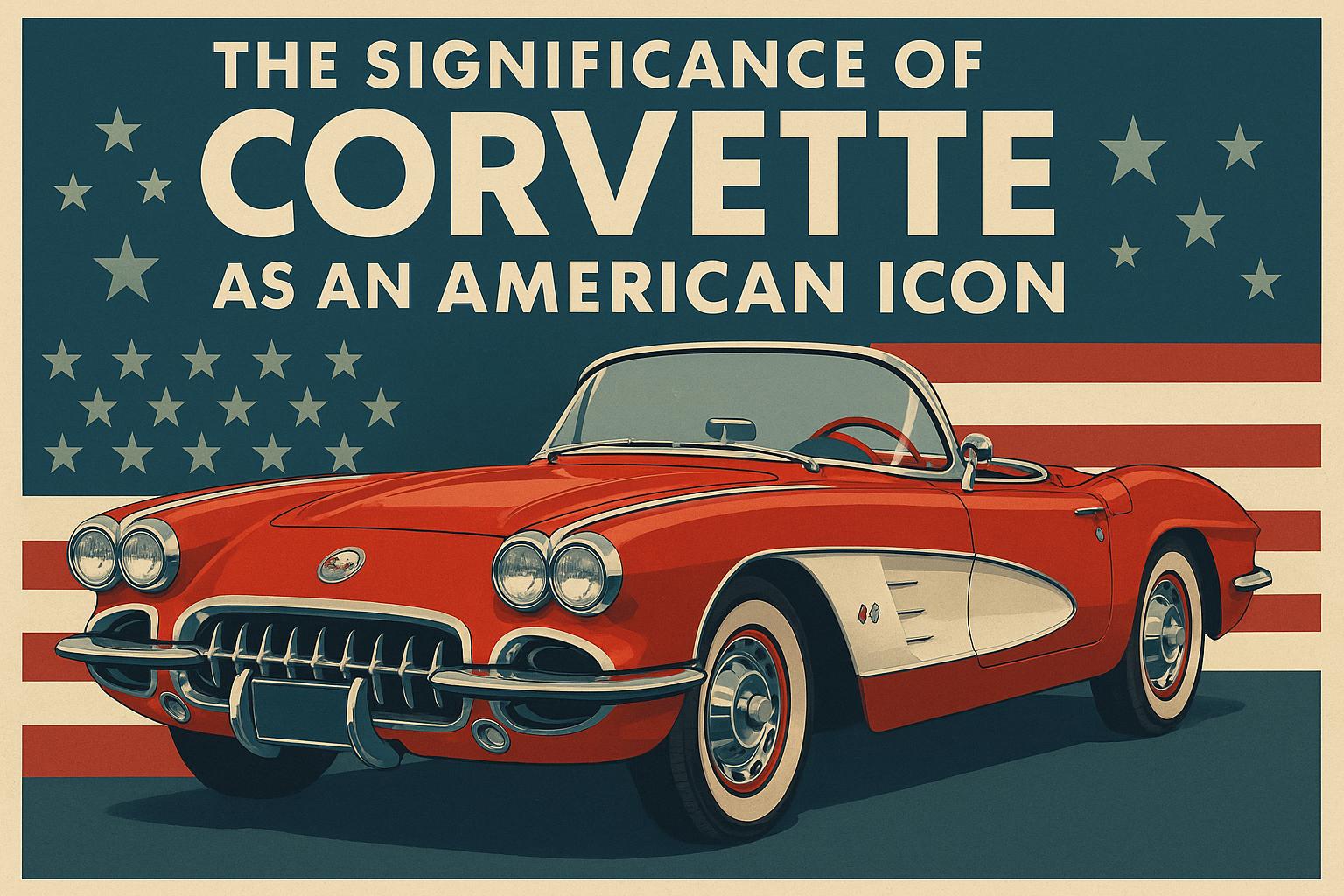
The significance of Corvette as an American icon.
The History of the Corvette
The Chevrolet Corvette holds a distinctive place as an American automotive icon, representing a sustained effort to combine performance engineering with accessible sports car ownership. Introduced in 1953, the Corvette emerged during a period when American manufacturers were exploring new market segments, particularly those inspired by European sports cars. Harley Earl, Chevrolet’s head of design, envisioned a vehicle that would bridge style, performance, and affordability. The earliest models reflected this ambition, though their performance initially fell short of expectations due to modest engine output.
The first generation, known as the C1, featured a fiberglass body, an unconventional material at the time. This decision was partly driven by manufacturing flexibility and weight reduction. Fiberglass allowed for smooth, sculpted lines that distinguished the Corvette from other American vehicles. Over time, the C1 improved through mechanical upgrades, including the introduction of V8 engines in 1955, which significantly enhanced performance and established the foundation for the Corvette’s reputation.
Evolution Through Generations
The transition from the C1 to the C2 generation marked a turning point in the Corvette’s development. Introduced in 1963, the C2—often referred to as the “Sting Ray”—reflected a shift toward more aggressive styling and more serious performance engineering. The split rear window design in the 1963 model became one of the most recognizable features in Corvette history, though it was short-lived due to visibility concerns. Beyond aesthetics, the C2 introduced independent rear suspension, improving handling and positioning the Corvette as a legitimate competitor to European sports cars.
The third generation, or C3, built on this momentum with a longer production run from 1968 to 1982. It featured more dramatic “coke bottle” styling and continued to offer increasingly powerful engines. However, the C3 era also coincided with stricter emissions regulations and fuel economy concerns, which temporarily constrained performance outputs. Despite these challenges, the Corvette maintained its identity as a performance-oriented vehicle.
Subsequent generations continued to refine both design and engineering. The C4, introduced in the 1980s, represented a complete redesign with a focus on aerodynamics, structural rigidity, and advanced electronics. Later generations such as the C5, C6, and C7 progressively improved driving dynamics, reliability, and interior quality. The introduction of the mid-engine C8 in 2020 marked one of the most significant architectural changes in Corvette history, aligning its layout with that of high-performance European supercars.
Technological Advancements
Throughout its history, the Corvette has served as a testing ground for technological innovation within General Motors. Early adoption of fuel injection systems in the 1950s demonstrated Chevrolet’s willingness to experiment with emerging technologies. These systems improved fuel delivery precision and contributed to increased power output.
The use of lightweight materials has also been a recurring theme. From the original fiberglass body to later applications of aluminum frames and carbon fiber components, the Corvette has consistently aimed to balance strength with weight efficiency. These material choices have contributed to improved acceleration, handling, and fuel efficiency over time.
In the 1980s, the C4 Corvette introduced a digital instrument cluster, reflecting broader trends in automotive electronics. This feature provided drivers with real-time performance data in a format that was considered advanced for its time. Later models expanded on this foundation with integrated driver assistance systems, configurable displays, and performance telemetry.
The C7 and C8 generations continued to integrate advanced engineering solutions, including magnetic ride control suspension systems and dual-clutch transmissions. These technologies enhanced both comfort and track performance, demonstrating the Corvette’s dual role as a road car and a performance machine.
Racing Heritage
The Corvette’s development has been closely linked with motorsports, where it has served as both a competitor and a platform for technological validation. Racing efforts began in the early years, but it was in the late 1990s and early 2000s that Corvette Racing became a dominant force in endurance events.
The Corvette has achieved multiple class victories at the 24 Hours of Le Mans, one of the most prestigious endurance races in the world. These successes have reinforced the vehicle’s credibility as a high-performance platform. Racing also provided valuable data that influenced production models, particularly in areas such as aerodynamics, cooling systems, and chassis tuning.
Chevrolet’s commitment to maintaining a factory-backed racing program has ensured continuous development. Lessons learned on the track are often translated into improvements in consumer models, creating a feedback loop between competition and production. This relationship underscores the Corvette’s role not just as a product, but as a performance benchmark within General Motors’ portfolio.
Corvette in Popular Culture
The Corvette’s influence extends beyond engineering and racing into broader cultural contexts. Since the mid-20th century, it has appeared in films, television shows, and music, often associated with mobility, independence, and technological progress. Its distinctive design makes it easily recognizable, contributing to its frequent use as a visual symbol.
In cinema, the Corvette has been featured in various genres, from action films to dramas, where it often serves as a marker of status or personality. In music, references to the Corvette frequently highlight themes of speed and aspiration. These cultural appearances have played a role in sustaining the vehicle’s public image across multiple generations.
The Corvette has also been embraced by collectors and enthusiast communities. Car shows, clubs, and dedicated events have helped maintain interest in both vintage and modern models. This ongoing engagement contributes to the Corvette’s longevity as a cultural artifact, rather than simply a product.
The American Dream on Wheels
The Corvette represents a combination of industrial capability and consumer aspiration. Its development reflects broader trends in the American automotive industry, including shifts in design philosophy, regulatory challenges, and technological progress. While it has evolved significantly since its introduction, the core objective—delivering performance-oriented driving at a relatively accessible price point—has remained consistent.
The transition to the mid-engine platform in the C8 highlights the Corvette’s ability to adapt to changing expectations while maintaining its identity. This adaptability has been a key factor in its continued relevance. Rather than relying solely on tradition, the Corvette has incorporated innovation in response to both competitive pressures and internal ambitions.
Conclusion
The Corvette’s history illustrates a continuous process of refinement and reinvention. From its origins as an experimental sports car to its current status as a technologically advanced performance vehicle, it has maintained a distinct position within the automotive landscape. Its contributions to engineering, motorsports, and culture demonstrate a sustained commitment to performance and design. As a result, the Corvette remains a significant reference point in discussions of American automotive development.
2nd Generation
- 1963 Corvette Stingray
- 1964 Corvette Sting Ray
- 1965 Corvette Sting Ray
- 1966 Corvette Sting Ray
- 1967 Corvette Sting Ray
3rd Generation
- 1968 Corvette Sting Ray
- 1969 Corvette Sting Ray
- 1970 Corvette Sting Ray
- 1971 Corvette Sting Ray
- 1972 Corvette Sting Ray
- 1973 Corvette Sting Ray
- 1974 Corvette Sting Ray
- 1975 Corvette Sting Ray
- 1976 Corvette Sting Ray
- 1977 Corvette Sting Ray
- 1978 Corvette Sting Ray
- 1979 Corvette Sting Ray
- 1980 Corvette Sting Ray
Modern Corvettes