- see contact page
- Currently offline
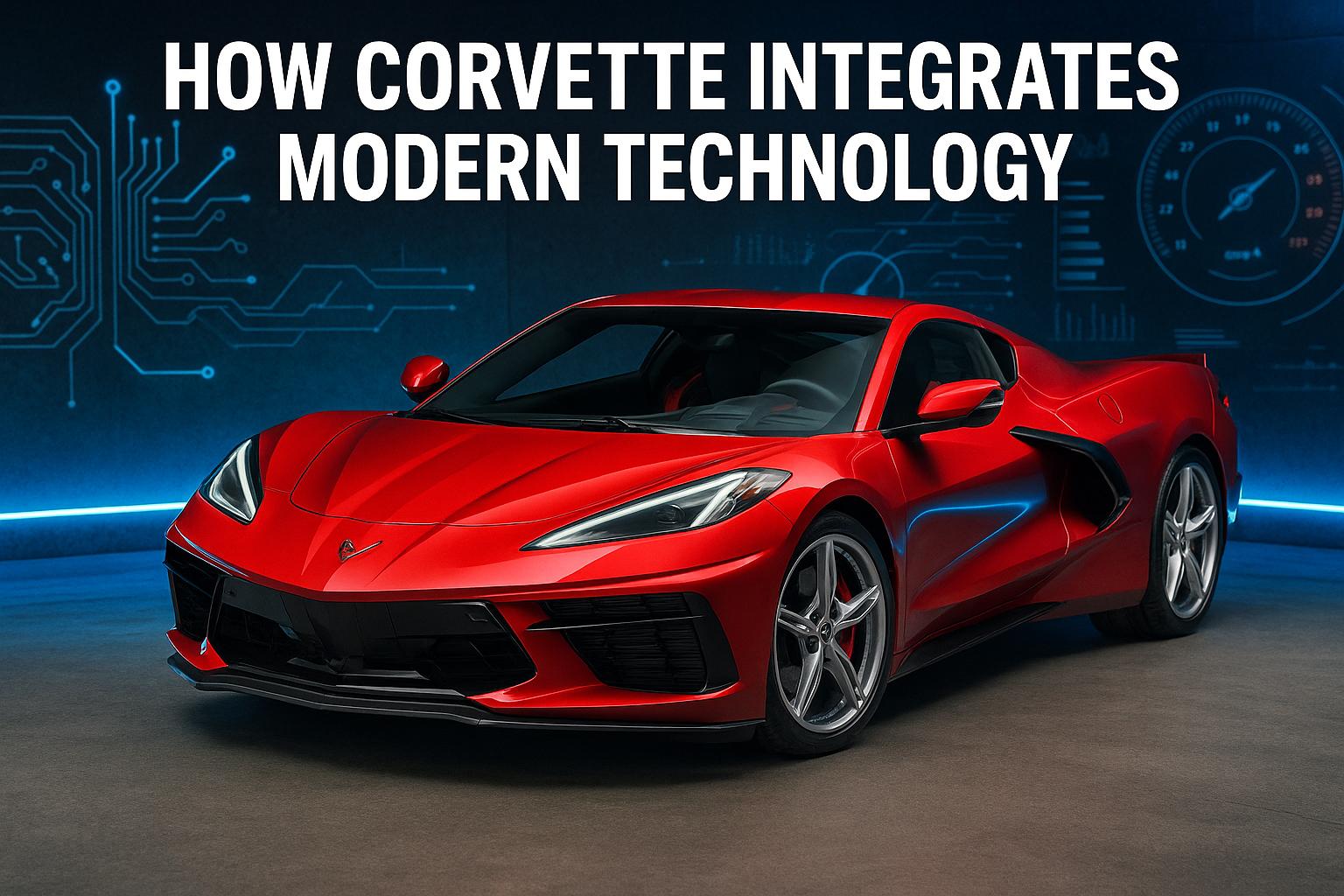
How Corvette integrates modern technology in its design.
Introduction to Corvette’s Technological Integration
The Corvette has long been positioned as a representative example of performance-focused automotive engineering in the United States. Over successive generations, the model has evolved from a mechanically driven sports car into a platform that integrates multiple advanced technologies. These developments are not limited to raw performance; they extend to areas such as efficiency, safety, comfort, and digital interaction. The modern Corvette reflects a coordinated approach where hardware and software systems are designed to function cohesively, supporting both driver engagement and operational precision.
Contemporary automotive design requires balancing traditional performance expectations with rapidly advancing digital systems. In this context, the Corvette serves as a case study in how legacy performance vehicles adapt to new technological standards while maintaining core design principles. Its engineering demonstrates how computational tools, electronic systems, and material science contribute to measurable improvements in vehicle dynamics and usability.
Advanced Aerodynamics and Materials
Aerodynamic efficiency plays a central role in the Corvette’s performance profile. Engineers employ advanced simulation tools, particularly computational fluid dynamics (CFD), to analyze airflow across the vehicle’s body. This allows for precise adjustments to surfaces, air intakes, and underbody panels. The objective is to minimize drag while maximizing downforce, ensuring stability at high speeds without compromising efficiency.
In addition to airflow optimization, the Corvette incorporates active aerodynamic elements in some configurations. Features such as adjustable spoilers and air management systems respond dynamically to speed and driving conditions. These mechanisms alter airflow patterns in real time, improving traction and reducing lift when necessary.
Material selection further enhances performance outcomes. The use of lightweight substances such as aluminum and carbon fiber reduces overall mass, which directly affects acceleration, braking, and fuel consumption. Structural components are engineered to maintain rigidity while minimizing unnecessary weight. This balance improves handling precision and contributes to safety by maintaining structural integrity during impact scenarios.
The integration of these materials also supports thermal management. Heat dissipation is critical in high-performance environments, and lightweight composites often provide better resistance to heat-related stress compared to traditional materials. As a result, the Corvette benefits from both mechanical efficiency and durability under demanding conditions.
Powertrain and Performance Technologies
The Corvette’s powertrain reflects ongoing advancements in engine efficiency and responsiveness. Modern engines utilize Variable Valve Timing (VVT), which adjusts the timing of valve operation based on engine speed and load. This allows the engine to optimize airflow and combustion across a wide range of conditions, improving both power output and fuel efficiency.
Another key system is Direct Fuel Injection, which delivers fuel directly into the combustion chamber at high pressure. This enables more precise control over fuel distribution, leading to improved combustion efficiency and reduced emissions. The combination of these technologies supports higher power density without significantly increasing fuel consumption.
Transmission systems have also evolved. Many Corvette models incorporate advanced dual-clutch or electronically controlled automatic transmissions. These systems provide faster gear changes compared to traditional manual setups, reducing power interruption during acceleration. The result is smoother and more efficient power delivery.
Suspension technology plays a critical role in translating engine performance into road capability. The Corvette’s Magnetic Ride Control system uses magnetorheological fluid within the dampers. This fluid changes viscosity in response to electromagnetic input, allowing the suspension to adapt almost instantly to road conditions. Sensors monitor parameters such as wheel movement, steering input, and vehicle speed, enabling continuous adjustments that improve both comfort and handling stability.
Digital Connectivity and Infotainment
The integration of digital systems within the Corvette cabin reflects broader trends in vehicle connectivity. The infotainment system centers around a touchscreen interface designed to provide access to navigation, media, and communication tools. The interface is structured to minimize driver distraction while maintaining functional accessibility.
Support for Apple CarPlay and Android Auto allows users to integrate their mobile devices with the vehicle’s system. This enables access to applications, voice commands, and messaging features through the car’s interface. By consolidating these functions, the system reduces the need for separate device interaction while driving.
In addition to entertainment and communication, digital displays provide performance-related information. Configurable instrument clusters can show metrics such as engine output, lap timing, and tire conditions. This is particularly relevant in performance driving scenarios, where real-time data contributes to more informed decision-making.
Connectivity also extends to vehicle diagnostics and updates. Some systems allow remote monitoring of vehicle status, including maintenance alerts and system health reports. In certain configurations, software updates can be delivered remotely, reducing the need for physical service visits and keeping systems current with the latest improvements.
Driver Assistance and Safety Features
While performance remains a defining characteristic, safety technologies have become an integral component of Corvette design. Advanced driver assistance systems rely on a network of sensors, cameras, and radar units to monitor the surrounding environment. These systems are designed to support driver awareness rather than replace driver control.
Features such as lane departure warning and lane keep assist detect unintended lane movement and provide corrective feedback. Adaptive cruise control adjusts vehicle speed based on traffic conditions, maintaining a set following distance from other vehicles. Rear cross-traffic alert assists during reversing maneuvers by identifying approaching obstacles outside the driver’s line of sight.
Collision mitigation systems are also incorporated in some models. These systems can issue warnings or apply braking force when a potential collision is detected. The effectiveness of these features depends on sensor accuracy and system calibration, both of which are continuously refined through data analysis and testing.
Structural safety remains a foundational aspect. The Corvette’s frame is engineered to absorb and distribute impact forces, protecting occupants while maintaining cabin integrity. Airbag systems and seatbelt technologies are integrated with electronic sensors that determine deployment timing and intensity based on crash conditions.
Convertible and Roof Technologies
Convertible variants of the Corvette illustrate the integration of mechanical engineering with automated systems. Modern retractable roof mechanisms are powered and controlled electronically, allowing operation with minimal driver input. These systems are designed to function within specific speed ranges, enabling adjustments without requiring the vehicle to come to a complete stop.
The engineering challenge lies in maintaining structural rigidity without a fixed roof. Reinforced chassis components and strategic weight distribution compensate for this absence, ensuring that handling characteristics remain consistent with coupe models. Aerodynamic performance is also preserved through careful design of the roof mechanism and surrounding body panels.
Noise reduction and weather sealing are additional considerations. Advanced insulation materials and precision engineering minimize wind noise and prevent water intrusion. These factors contribute to maintaining cabin comfort regardless of roof configuration.
Conclusion
The Corvette demonstrates how a performance-oriented vehicle can incorporate a wide range of modern technologies without compromising its core design objectives. Through the integration of aerodynamic optimization, advanced materials, efficient powertrain systems, and digital connectivity, the vehicle achieves a balance between traditional mechanical performance and contemporary technological capability.
Each system within the Corvette is part of a broader engineering framework that emphasizes coordination and adaptability. Rather than functioning as isolated features, these technologies interact to improve overall vehicle performance, safety, and usability. This integrated approach reflects ongoing developments in automotive engineering and positions the Corvette as a relevant example of how established models evolve in response to technological progress.
For more detailed information on specific Corvette features and technology, visit the official Chevrolet Corvette website.
2nd Generation

- 1963 Corvette Stingray
- 1964 Corvette Sting Ray
- 1965 Corvette Sting Ray
- 1966 Corvette Sting Ray
- 1967 Corvette Sting Ray
3rd Generation
- 1968 Corvette Sting Ray
- 1969 Corvette Sting Ray
- 1970 Corvette Sting Ray
- 1971 Corvette Sting Ray
- 1972 Corvette Sting Ray
- 1973 Corvette Sting Ray
- 1974 Corvette Sting Ray
- 1975 Corvette Sting Ray
- 1976 Corvette Sting Ray
- 1977 Corvette Sting Ray
- 1978 Corvette Sting Ray
- 1979 Corvette Sting Ray
- 1980 Corvette Sting Ray
Modern Corvettes