- see contact page
- Currently offline
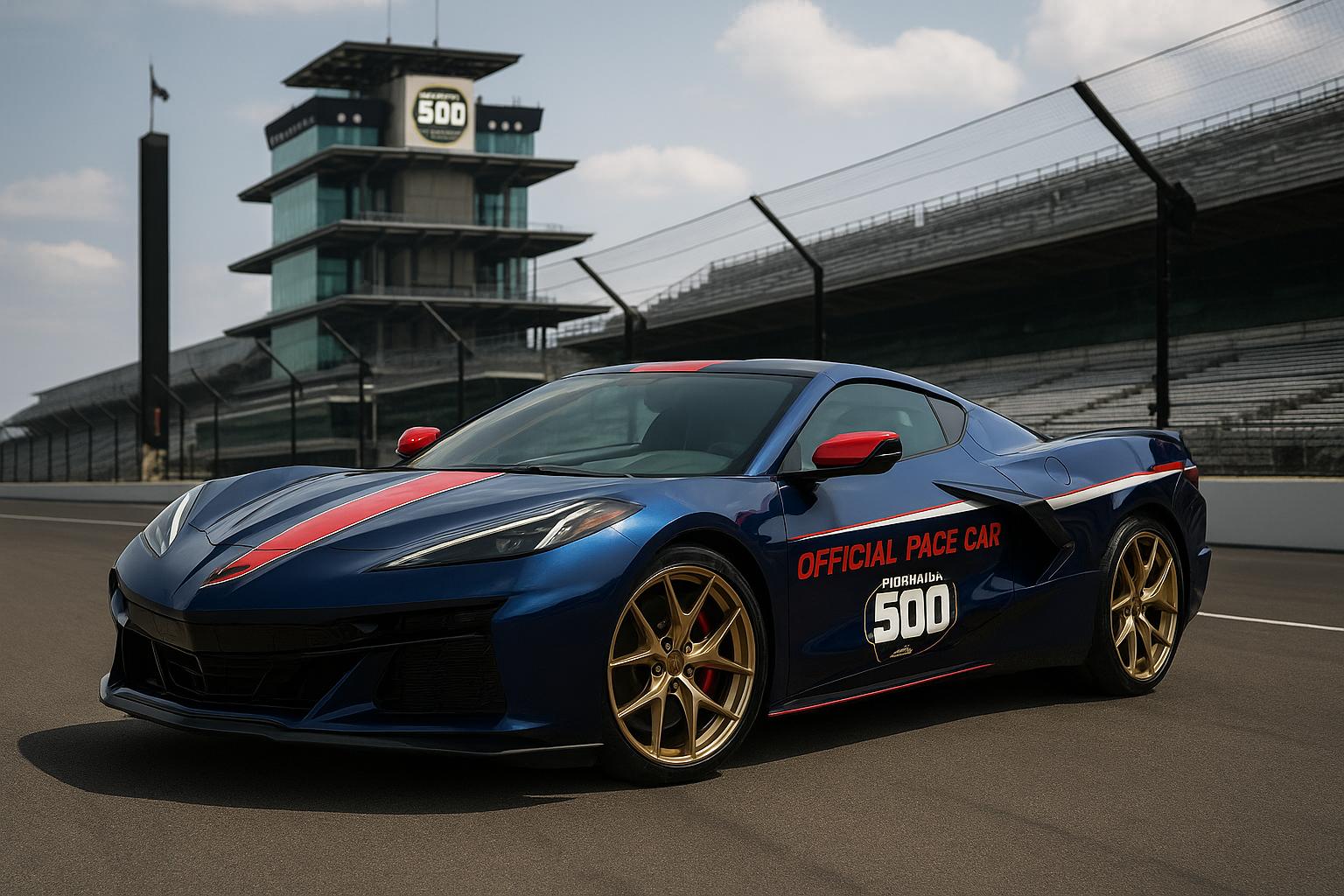
The Corvette’s use as a pace car at the Indianapolis 500.
The Corvette’s Legacy in the Indianapolis 500
The Indianapolis 500, often referred to as the “Greatest Spectacle in Racing,” has seen a dynamic array of pace cars throughout its storied history. Among them, the Chevrolet Corvette stands out as one of the most recurring and noteworthy pace cars. The Corvette’s presence at the Indianapolis 500 not only highlights the model’s performance and style but also reinforces its broader role within American automotive culture. Over decades of appearances, the Corvette has become closely associated with the ceremonial and operational aspects of the race, bridging the gap between production sports cars and elite motorsport.
A pace car serves a critical function during the race. It leads the field during warm-up laps, controls race restarts, and ensures that drivers maintain a safe and consistent speed under caution conditions. Because of these responsibilities, the selected vehicle must deliver both performance and reliability. The Corvette’s engineering characteristics have consistently aligned with these requirements, allowing it to earn repeated selection over time.
Introduction of the Corvette as a Pace Car
The Chevrolet Corvette first made its debut as a pace car at the Indianapolis 500 in 1978. This marked an important milestone for both Chevrolet and the Indianapolis Motor Speedway. The selection was not arbitrary; the Corvette had already established itself as a high-performance sports car capable of sustained speed and stable handling. These characteristics made it well-suited to guide a grid of open-wheel race cars.
The 1978 Corvette pace car also commemorated the model’s 25th anniversary. This celebration was reflected in a distinctive silver and black paint scheme, which became one of the most recognizable visual elements associated with Corvette pace cars. Chevrolet also produced a limited number of replica models for public purchase, establishing a tradition that would continue in later years. This approach linked the excitement of the race to consumer vehicles, strengthening brand visibility.
The debut set a precedent. It demonstrated that a production-based sports car, with appropriate modifications, could fulfill the dual roles of visual centerpiece and functional support vehicle in a premier racing event.
Subsequent Appearances
Since its initial appearance, the Corvette has been selected as the pace car for the Indianapolis 500 multiple times across different decades. Each selection reflects not only the vehicle’s ongoing relevance but also its ability to adapt to evolving performance and safety standards. Notable appearances include various generations of the Corvette, from the C3 platform of the late 1970s to more recent C7 and C8 models.
Each subsequent pace car appearance has offered an opportunity to showcase advancements in automotive technology. For example, later models incorporated lightweight materials such as aluminum frames and carbon fiber components. These improvements enhanced acceleration, braking, and cornering stability—qualities essential for maintaining consistent speeds on the track.
The repeated selection of the Corvette also highlights its role as a flagship vehicle for Chevrolet. By placing the Corvette at the forefront of a globally recognized motorsport event, the manufacturer reinforces its performance credentials and technological capabilities. This relationship benefits both the race and the brand, creating a mutually reinforcing association between innovation and tradition.
Design and Technical Features
Each Corvette chosen as a pace car typically undergoes specific preparation to meet the demands of the Indianapolis Motor Speedway. While many pace cars remain close to their production counterparts, certain enhancements are introduced to ensure operational reliability under race conditions.
Mechanical adjustments often include upgraded cooling systems designed to handle prolonged idling and rapid acceleration cycles. Brake systems may also be reinforced to accommodate repeated deceleration during caution periods. In some cases, suspension tuning is modified to optimize stability at varying speeds, ensuring smooth and predictable handling while leading a tightly packed field of high-performance race cars.
Safety equipment is another essential component. Pace cars are typically fitted with communication systems that allow coordination with race officials. Additional lighting systems are installed to signal drivers during caution periods, improving visibility across the track. These features ensure that the pace car not only performs efficiently but also contributes to the overall safety infrastructure of the event.
From a design perspective, Corvette pace cars often feature distinctive visual elements. Unique paint schemes, commemorative decals, and special badging distinguish them from standard production models. These design choices serve both functional and promotional purposes, making the pace car easily identifiable while also celebrating the specific year of the race.
Impact and Legacy
The Corvette’s recurring role as a pace car at the Indianapolis 500 underscores its status as an iconic sports car within the automotive industry. Its presence at the event is not merely ceremonial; it reflects decades of engineering development and consistent performance capability. The Corvette has evolved from a relatively simple sports car into a technologically advanced platform, incorporating innovations such as mid-engine configurations, advanced aerodynamics, and modern driver-assistance features.
The legacy of the Corvette at the Indianapolis 500 also extends beyond the track. Pace car replicas have become collectible items, contributing to the model’s cultural and economic significance. Enthusiasts often view these vehicles as tangible connections to a historic racing event. This connection reinforces the Corvette’s reputation not only as a performance vehicle but also as a symbol of continuity within American automotive history.
In broader terms, the Corvette’s participation illustrates the relationship between production vehicles and motorsports. While the Indianapolis 500 primarily features purpose-built race cars, the inclusion of a production-based pace car demonstrates how automotive innovation can translate between different domains. The Corvette serves as a visible example of how engineering principles developed for consumer vehicles can align with the rigorous demands of professional racing environments.
As the Indianapolis 500 continues to evolve, the Corvette remains a consistent element within its framework. Its repeated selection reflects both tradition and adaptability, ensuring that it continues to play a meaningful role in one of the world’s most recognized motorsport events. To further explore the history and impact of the Corvette in racing and its legacy at the Indianapolis 500, visit the official Indianapolis Motor Speedway website or the Chevrolet Corvette page for more detailed insights.
2nd Generation
- 1963 Corvette Stingray
- 1964 Corvette Sting Ray
- 1965 Corvette Sting Ray
- 1966 Corvette Sting Ray
- 1967 Corvette Sting Ray
3rd Generation
- 1968 Corvette Sting Ray
- 1969 Corvette Sting Ray
- 1970 Corvette Sting Ray
- 1971 Corvette Sting Ray
- 1972 Corvette Sting Ray
- 1973 Corvette Sting Ray
- 1974 Corvette Sting Ray
- 1975 Corvette Sting Ray
- 1976 Corvette Sting Ray
- 1977 Corvette Sting Ray
- 1978 Corvette Sting Ray
- 1979 Corvette Sting Ray
- 1980 Corvette Sting Ray
Modern Corvettes