- see contact page
- Currently offline
The role of Zora Arkus-Duntov, the “Father of the Corvette.”
The Evolution of the Corvette Under Zora Arkus-Duntov
Zora Arkus-Duntov’s contributions to the Chevrolet Corvette are pivotal in transforming the vehicle into an American automotive icon. Known as the Father of the Corvette, Duntov’s influence began shortly after he joined General Motors in 1953. With his engineering prowess and vision for what the Corvette could become, Duntov played a crucial role in elevating the car’s status from a stylish, yet underpowered vehicle, to a high-performance sports car revered by enthusiasts and racers alike.
The Genesis of Duntov’s Involvement
When Duntov, a Belgian-born engineer, first encountered the Corvette at the 1953 Motorama event, he saw enormous potential. Despite its stylish design, the Corvette lacked power and performance. The vehicle’s aesthetics were appealing, but to Duntov, aesthetics alone were not enough to compete in the highly competitive sports car market. Recognizing the gap between the current capabilities of the Corvette and its potential, Duntov decided to act.
Shortly after his initial exposure to the vehicle, Duntov wrote a memo to Chevrolet on December 16, 1953, titled “Thoughts Pertaining to Youth, Hot Rodders and Chevrolet.” This memo outlined detailed strategies to enhance the car’s performance, positioning it as not just a car, but a formidable sports machine. His insights emphasized the importance of incorporating performance-driven engineering changes to attract not just everyday drivers, but hot rodders and racing aficionados.
This memo caught the attention of Chevrolet’s higher-ups, including Harley Earl, who was instrumental in the Corvette’s initial design. Earl, who was already vested in creating a dream car for enthusiasts, recognized the value in Duntov’s ideas. This alignment of vision between Earl and Duntov laid foundational grounds for what was to come for the Corvette under Duntov’s influence.
The Chief Engineer of Corvette
By 1955, Duntov had become the Corvette’s first chief engineer. His ascension to this role marked a significant shift in the development trajectory of the Corvette. Under his leadership, the Corvette underwent a transformation that not only improved its performance but also positioned it as a legitimate competitor in the sports car industry.
One of the first major changes was the introduction of the 265 V8 engine. This was a crucial turning point for the Corvette, as it transformed the vehicle from a stylish roadster into a legitimate sports car capable of high performance. The new engine met the demands of racing enthusiasts, offering power that aligned with what enthusiasts expected from a competitive sports vehicle. For Duntov, the introduction of the V8 engine was just the beginning of a series of engineering enhancements that would define his tenure.
Duntov was keenly aware that for Chevrolet to compete with sports car giants, it would need to focus on performance and engineering excellence. His vision involved not just meeting industry standards but setting new benchmarks in what performance cars could achieve. Thus began an era of innovation where Duntov’s technical acumen was the driving force behind the Corvette’s evolution.
Innovations and Technical Advancements
Duntov’s technical prowess was most evident in the innovative aspects he introduced to the Corvette brand. One of his first major contributions was the legendary *Duntov Cam,* an advancement that played a significant role in improving the V8 engine’s power output. The camshaft, named after Duntov himself, was a highlight in mechanical innovation, providing the vehicle with enhanced performance capabilities that appealed to both road and track enthusiasts.
In addition to the Duntov Cam, he was instrumental in the development of four-wheel disc brakes and independent rear suspension systems. These modifications significantly enhanced the Corvette’s handling and braking performance. Prior to these changes, braking and handling were areas where many American cars lagged in comparison to their European counterparts. With these enhancements, Duntov ensured that the Corvette matched up to global racing standards, thus broadening its appeal and capability.
Another groundbreaking advancement spearheaded by Duntov was the introduction of fuel injection in 1957. During a time when carburetion was the norm in American vehicles, introducing fuel injection marked a significant leap forward. This technology improved efficiency and performance, setting the Corvette apart in the field of American sports cars. Fuel injection allowed the Corvette to achieve unprecedented levels of power and speed, thus solidifying its position in the high-performance sports car segment.
Racing to Success
Understanding the power of racing as a marketing tool, Duntov prioritized the Corvette’s presence in competitive racing. He believed that success on the racetrack could directly translate to increased appeal and credibility in the consumer market. This strategy was reflected in the Corvette’s participation in notable races such as the 24 Hours of Le Mans and the 12 Hours of Sebring.
Duntov’s relentless push for racing success helped to build a robust reputation for the Corvette as a performance powerhouse. Through competitive racing, the capabilities and reliability of the Corvette were demonstrated on a global stage, enthralling racing enthusiasts and casual observers alike. The exposure and success they achieved in racing further cemented the Corvette’s status as a rugged and reliable performance car.
Legacy
Zora Arkus-Duntov’s tenure with Chevrolet left an indelible mark on the Corvette lineage. His vision and engineering innovations turned a fledgling sports car into one of the most renowned vehicles in automotive history. The transformations he orchestrated laid a foundation for the Corvette, paving the way for future innovations and iterations of the model that continued the legacy he began.
Duntov’s legacy extends beyond engineering; it is about changing perceptions and setting new standards in automotive performance. His efforts are still celebrated today by Corvette enthusiasts and the automotive industry. They recognize not just his contributions to the Corvette but also his passion and dedication to innovation in automotive engineering.
Those interested in exploring more about Zora Arkus-Duntov’s impact can delve into various automotive history resources, uncovering the numerous ways he reshaped the American sports car landscape. Detail-oriented and forward-thinking, Duntov’s influence continues to resonate, inspiring new generations of automotive engineers to push the boundaries of what is possible.
2nd Generation
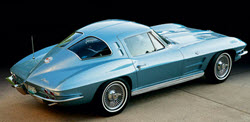
- 1963 Corvette Stingray
- 1964 Corvette Sting Ray
- 1965 Corvette Sting Ray
- 1966 Corvette Sting Ray
- 1967 Corvette Sting Ray
3rd Generation
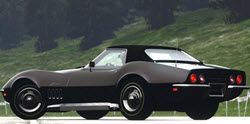
- 1968 Corvette Sting Ray
- 1969 Corvette Sting Ray
- 1970 Corvette Sting Ray
- 1971 Corvette Sting Ray
- 1972 Corvette Sting Ray
- 1973 Corvette Sting Ray
- 1974 Corvette Sting Ray
- 1975 Corvette Sting Ray
- 1976 Corvette Sting Ray
- 1977 Corvette Sting Ray
- 1978 Corvette Sting Ray
- 1979 Corvette Sting Ray
- 1980 Corvette Sting Ray
Modern Corvettes