- see contact page
- Currently offline
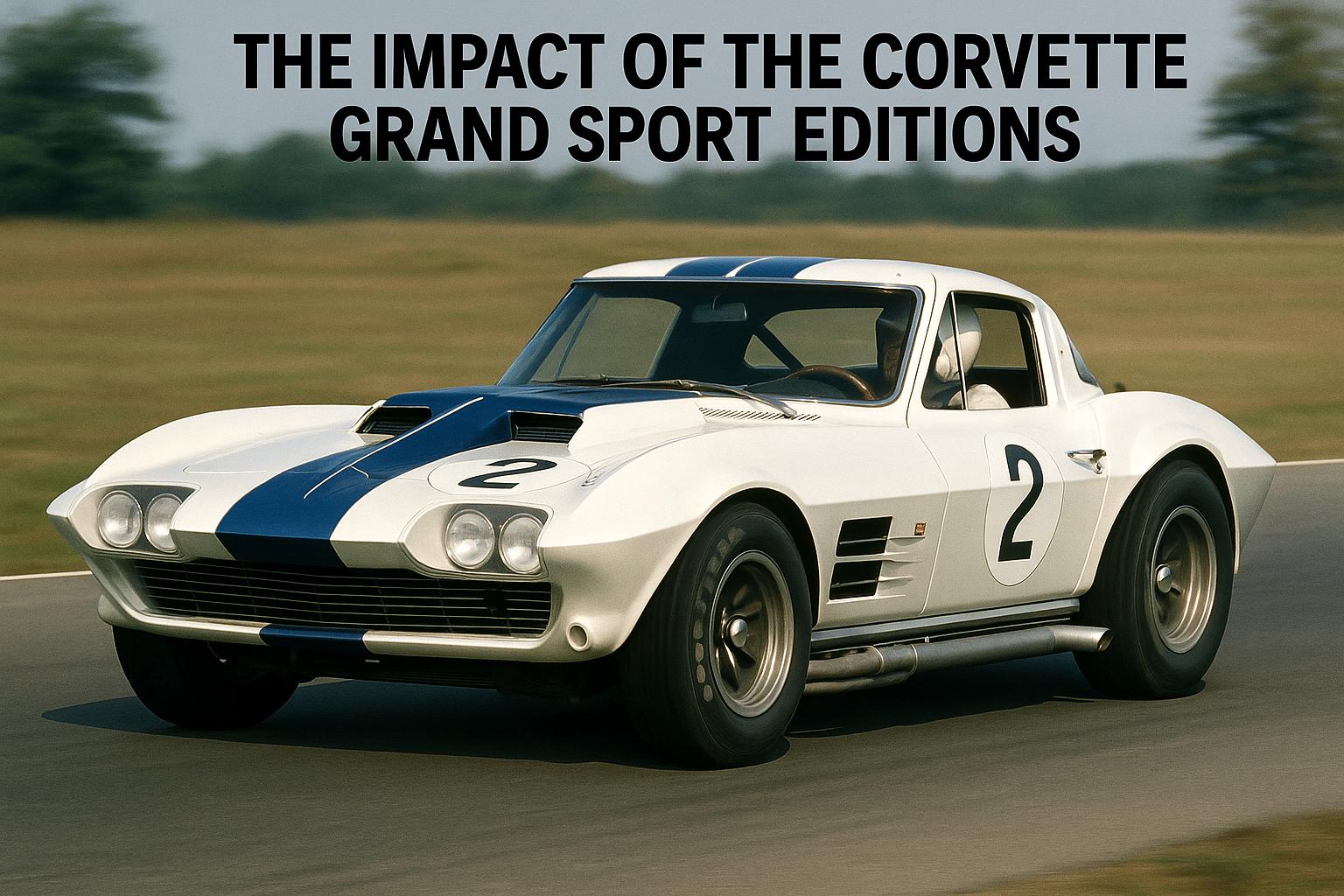
The impact of the Corvette Grand Sport editions.
Introduction to the Corvette Grand Sport Editions
The Corvette Grand Sport editions occupy a distinctive space within the broader development of the Chevrolet Corvette, representing a deliberate effort to connect racing heritage with production performance. Rather than focusing solely on peak power or luxury, the Grand Sport philosophy emphasizes a balanced approach that combines accessible performance with engineering derived from motorsport experience. Over time, these editions have served as a bridge between standard Corvette models and more extreme variants, offering a carefully calibrated blend of capability and usability.
The Grand Sport designation is not merely a trim level but a reflection of a broader engineering concept. It integrates aerodynamic refinement, chassis tuning, and braking improvements in a way that reflects lessons learned from competition. This approach has allowed the Grand Sport to maintain relevance across multiple Corvette generations, adapting to technological advancements while preserving its underlying purpose.
Historical Context
The origins of the Grand Sport trace back to 1963, when Zora Arkus-Duntov, widely regarded as the driving force behind the Corvette’s performance identity, sought to elevate the car’s position in international motorsport. His objective was to create a lightweight, track-focused machine capable of competing against established European racing cars. The result was the original Grand Sport, a significantly modified Corvette featuring reduced weight, enhanced aerodynamics, and a high-performance engine configuration.
Due to internal corporate restrictions at General Motors, particularly a ban on factory-backed racing, only five examples of the 1963 Grand Sport were completed. Despite the limited production, these vehicles demonstrated impressive performance in racing environments, quickly establishing a reputation that exceeded their numbers. Their rarity and competitive success contributed to a lasting legacy, making them highly regarded among collectors and historians.
The Grand Sport name remained dormant for several decades before being reintroduced in later Corvette generations. When it returned, the intention was not to replicate the original cars directly but to reinterpret their principles for modern production vehicles. This revival allowed Chevrolet to reconnect with an important chapter of its performance history while offering contemporary drivers a car influenced by those early engineering ambitions.
Design and Technical Aspects
Grand Sport Corvettes are defined by a combination of visual distinctiveness and functional enhancements. From a design perspective, these models often incorporate wider bodywork, revised aerodynamic components, and unique badging that differentiate them from standard versions. These changes are not purely cosmetic; they are typically linked to performance objectives such as increased downforce, improved cooling, and greater stability at higher speeds.
A key characteristic of the Grand Sport is the integration of components from higher-performance Corvette variants. For example, elements from the Z06, such as suspension systems, braking hardware, and cooling technologies, are frequently adapted for Grand Sport models. This approach allows for a significant performance upgrade without the added complexity or cost associated with forced induction or more aggressive engine configurations.
Weight distribution and chassis rigidity are also carefully considered. By combining structural enhancements with advanced materials, engineers aim to create a platform that responds predictably under a range of driving conditions. This contributes to the Grand Sport’s reputation for balanced handling, making it suitable for both track use and everyday driving.
Performance Features
In terms of performance, the Grand Sport prioritizes controllability and consistency over maximum output. Typically equipped with naturally aspirated V8 engines, these models deliver strong acceleration while maintaining a linear power curve. This characteristic enables drivers to modulate power effectively, particularly in dynamic driving scenarios such as cornering or track sessions.
Modern Grand Sport editions incorporate advanced systems designed to enhance driver confidence and adaptability. Technologies such as magnetic selective ride control allow the suspension to adjust in real time, balancing ride comfort with performance demands. Similarly, performance traction management systems provide multiple driving modes, enabling drivers to tailor vehicle behavior to specific conditions.
Braking performance is another area of emphasis. Larger brake rotors, multi-piston calipers, and improved cooling contribute to consistent stopping power, even under sustained high-speed use. These features are crucial for maintaining reliability during track driving, aligning with the Grand Sport’s motorsport-inspired objectives.
Evolution Across Generations
As the Corvette platform evolved, so too did the interpretation of the Grand Sport concept. Each generation introduced new technologies and design philosophies, which were incorporated into the Grand Sport in ways that reflected contemporary engineering standards.
For instance, later models benefited from advancements in electronic driver aids, materials science, and manufacturing precision. The transition to mid-engine architecture in the C8 Corvette marked a significant shift, influencing weight distribution and handling dynamics. While the Grand Sport variant within this architecture may differ in execution from earlier models, the underlying principles of balance and accessibility remain consistent.
This adaptability has allowed the Grand Sport to maintain relevance despite changes in automotive technology and market expectations. Rather than becoming a static tribute to the past, it continues to evolve in response to new performance benchmarks and consumer demands.
Market Impact
The Grand Sport editions have played an important role in shaping the Corvette’s market positioning. By offering a model that sits between the base Corvette and higher-performance variants, Chevrolet has created an option that appeals to a broad range of buyers. This positioning allows customers to access advanced performance features without the higher costs associated with top-tier models.
From a value perspective, Grand Sport models often demonstrate strong retention in the secondary market. Their combination of performance capability, limited availability in certain years, and historical significance contributes to sustained interest among collectors. While not as rare as the original 1963 examples, modern Grand Sports still benefit from their connection to a well-established legacy.
Additionally, these editions reinforce the Corvette’s identity as a performance-oriented vehicle that remains accessible compared to many competitors. This balance has been a consistent factor in the Corvette’s success, and the Grand Sport plays a key role in maintaining that equilibrium.
Car Culture Influence
The influence of the Grand Sport extends beyond its technical specifications into broader automotive culture. These models frequently appear in car shows, enthusiast gatherings, and racing events, where they are appreciated for both their historical significance and their performance capabilities. Their connection to the original 1963 program adds a layer of narrative that resonates with enthusiasts interested in automotive heritage.
In addition to physical events, the Grand Sport has been represented in various forms of media, including simulation games and digital automotive platforms. These representations contribute to its recognition among younger audiences, ensuring that the nameplate continues to be relevant in evolving cultural contexts.
The consistent presence of the Grand Sport in enthusiast discussions reflects its status as more than a variant; it is often viewed as a benchmark for balanced performance within the Corvette lineup. This perception reinforces its importance within both the brand and the wider automotive community.
Conclusion
The Corvette Grand Sport editions represent a sustained effort to integrate racing principles into production vehicles in a practical and accessible manner. From their origins in a limited 1963 racing program to their modern interpretations, these models have maintained a focus on balance, control, and engineering precision.
By combining historical significance with contemporary technology, the Grand Sport continues to serve as a link between the Corvette’s past and present. Its role within the lineup underscores the value of performance that is not solely defined by power, but by the ability to deliver a controlled and engaging driving experience across a variety of conditions.
2nd Generation

- 1963 Corvette Stingray
- 1964 Corvette Sting Ray
- 1965 Corvette Sting Ray
- 1966 Corvette Sting Ray
- 1967 Corvette Sting Ray
3rd Generation
- 1968 Corvette Sting Ray
- 1969 Corvette Sting Ray
- 1970 Corvette Sting Ray
- 1971 Corvette Sting Ray
- 1972 Corvette Sting Ray
- 1973 Corvette Sting Ray
- 1974 Corvette Sting Ray
- 1975 Corvette Sting Ray
- 1976 Corvette Sting Ray
- 1977 Corvette Sting Ray
- 1978 Corvette Sting Ray
- 1979 Corvette Sting Ray
- 1980 Corvette Sting Ray
Modern Corvettes