
- see contact page
- Currently offline
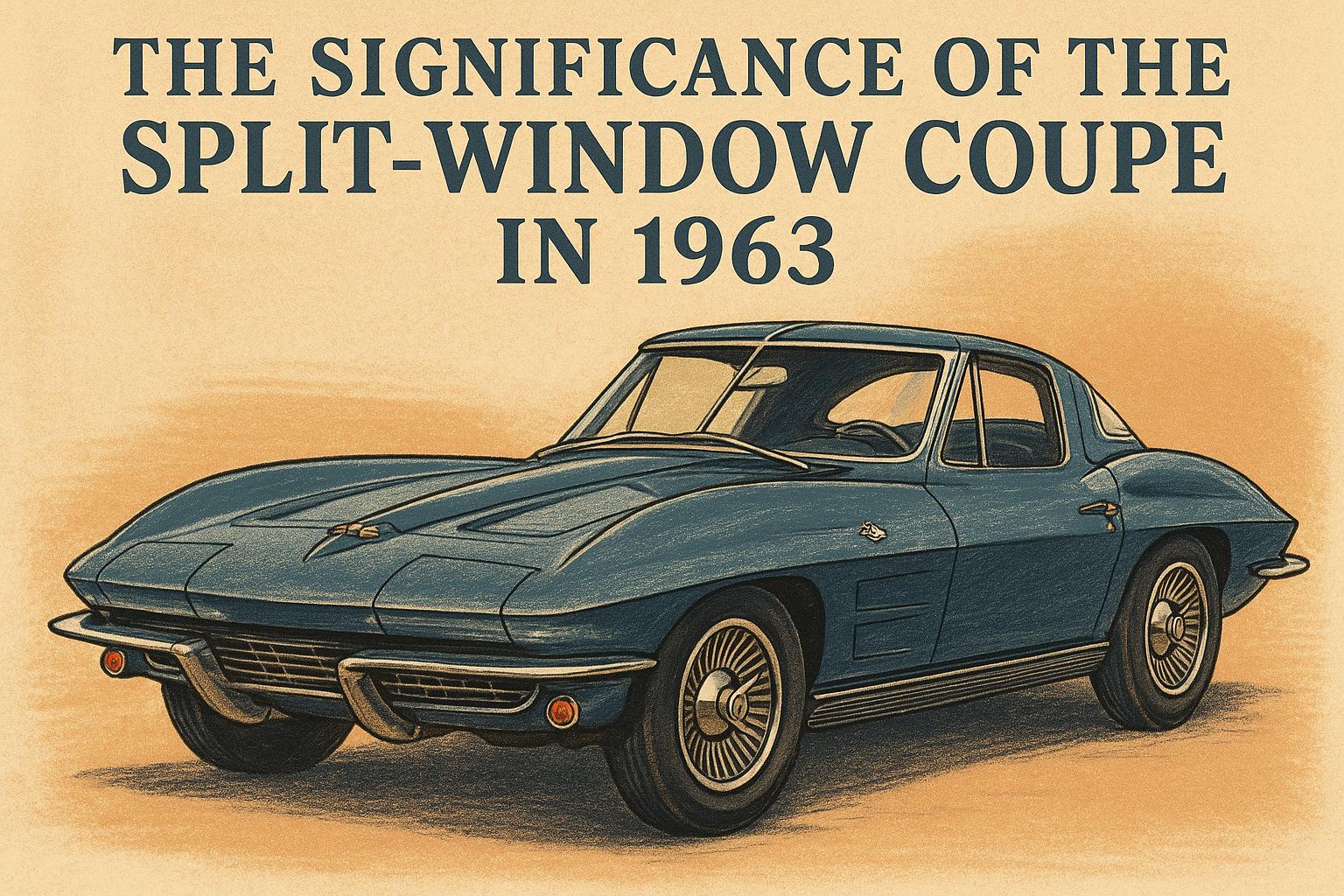
The significance of the split-window coupe in 1963.
The Split-Window Corvette Coupe of 1963
The 1963 Chevrolet Corvette, widely known as the split-window coupe, represents a turning point in American automotive development. Introduced as part of the second generation of Corvettes, often referred to as the C2 series, this model marked a departure from the earlier, more conservative designs of the 1950s. It combined new engineering solutions with a distinctive visual identity that set it apart from both domestic and international competitors. The result was a vehicle that aligned performance, structure, and form in a way that influenced the trajectory of sports car design for decades.
The transition from the first-generation Corvette to the 1963 model involved a comprehensive rethinking of chassis construction, body styling, and mechanical capability. Chevrolet aimed to position the Corvette as a serious contender in the performance market, rather than merely a stylish convertible. The introduction of the coupe body style, particularly with its unconventional rear window design, reinforced that ambition.
Design and Aesthetic Appeal
The most recognizable feature of the 1963 Corvette coupe is its split rear window, which divides the back glass into two distinct sections with a central spine. This design was promoted by GM’s head of styling, Bill Mitchell, who sought to create a vehicle that conveyed motion even at a standstill. The split-window configuration contributed to a sense of symmetry and visual tension, enhancing the car’s overall profile.
The exterior design also incorporated sharply defined lines, including a pronounced ridge running along the hood and down the rear deck. Hidden headlamps, another notable feature, contributed to a cleaner front-end appearance while improving aerodynamic efficiency when closed. The overall form was lower and more compact compared to earlier Corvettes, an intentional decision aimed at improving both handling and visual proportion.
The coupe’s roofline sloped gradually toward the rear, integrating the split window into the car’s flowing silhouette. Functional vents were positioned along the sides, adding to the car’s performance-oriented aesthetic. While some critics noted that the split window slightly restricted rearward visibility, it remained a defining feature that distinguished the 1963 model from all subsequent versions.
Inside the vehicle, the cockpit reflected a driver-focused approach. The dashboard layout emphasized instrumentation clarity, with clearly arranged gauges and controls. The use of materials and finishes aimed to balance durability with a sense of refinement, aligning with the Corvette’s dual identity as both a performance car and a premium product.
Engineering Advancements
The 1963 Corvette introduced a new chassis that significantly improved structural rigidity. Unlike the previous generation, which relied on a somewhat modified passenger car frame, the C2 Corvette utilized a purpose-built structure designed specifically for performance applications. This change enhanced handling characteristics and reduced flex during high-speed driving.
One of the most important mechanical innovations was the implementation of an independent rear suspension system. This marked a departure from the solid rear axle used in earlier models and allowed for improved traction, cornering stability, and ride quality. The independent setup became a standard feature in Corvettes moving forward and contributed to the car’s competitiveness with European sports cars.
The engine options centered around the 327 cubic inch V8, which was available in multiple configurations. These ranged from a base version producing approximately 250 horsepower to more advanced variants delivering up to 360 horsepower, with fuel-injected models offering even higher performance potential. This range allowed buyers to select an engine that matched their driving priorities, whether focused on daily usability or maximum output.
Transmission choices included both manual and automatic options, though performance-oriented buyers often selected the four-speed manual gearbox. The combination of a powerful V8, improved suspension system, and more rigid chassis resulted in a vehicle capable of strong acceleration and precise handling.
Braking performance was also enhanced compared to earlier models, although disc brakes would not become standard until later in the decade. Nonetheless, the overall engineering package demonstrated a clear shift toward modern sports car design principles.
Influence on Future Models
Although the split-window design was limited to the 1963 model year, its broader influence extended well beyond its brief production run. Internal concerns about rear visibility led to the removal of the split in 1964, resulting in a single-piece rear window for subsequent coupes. Despite this change, the 1963 version remained distinct and immediately recognizable.
The design language introduced with the 1963 Corvette set the foundation for later C2 models and influenced subsequent generations. Elements such as the sculpted body lines, driver-oriented cockpit, and emphasis on aerodynamics became recurring themes in Corvette development. The adoption of independent rear suspension, in particular, represented a long-term engineering shift that aligned the Corvette with international performance standards.
Beyond the Corvette lineup, the 1963 model contributed to a broader acceptance of American sports cars in global markets. Its combination of style and technical sophistication demonstrated that domestic manufacturers could produce vehicles comparable to established European competitors.
Over time, the limited production of the split-window coupe, combined with its unique design, contributed to its growing reputation among collectors. Vehicles that were once modified to remove the split rear window have, in many cases, been restored to their original configuration, reflecting a renewed appreciation for the original design intent.
The Split Window’s Legacy
The legacy of the 1963 split-window Corvette is closely tied to its distinctiveness and its role in reshaping expectations for American performance cars. It stands as a reference point for how design and engineering can converge to produce a vehicle that is both functional and visually memorable.
Collectors and historians often view the split-window coupe as one of the most significant Corvette models ever produced. Its limited production and immediate recognizability contribute to its continued desirability. Auction results and private sales frequently place well-preserved examples among the more valuable classic American cars.
The vehicle also serves as a case study in the balance between design innovation and practical considerations. While the split window introduced compromises in visibility, its impact on the car’s identity outweighed these concerns in the long term. This highlights the influence of design leadership in shaping automotive history.
Today, the 1963 Corvette coupe is exhibited in collections, museums, and automotive events, where it continues to attract attention for its distinctive appearance and historical significance. It remains a subject of study for those interested in automotive design evolution, as well as a benchmark for evaluating the progression of the Corvette line.
For more insights into vintage automobiles, enthusiasts may explore Hemmings, a resource that provides comprehensive information on classic cars.
2nd Generation

- 1963 Corvette Stingray
- 1964 Corvette Sting Ray
- 1965 Corvette Sting Ray
- 1966 Corvette Sting Ray
- 1967 Corvette Sting Ray
3rd Generation
- 1968 Corvette Sting Ray
- 1969 Corvette Sting Ray
- 1970 Corvette Sting Ray
- 1971 Corvette Sting Ray
- 1972 Corvette Sting Ray
- 1973 Corvette Sting Ray
- 1974 Corvette Sting Ray
- 1975 Corvette Sting Ray
- 1976 Corvette Sting Ray
- 1977 Corvette Sting Ray
- 1978 Corvette Sting Ray
- 1979 Corvette Sting Ray
- 1980 Corvette Sting Ray
Modern Corvettes